LED vs QLED vs OLED: What the Labels Actually Mean
Recommended picks

What LED Actually Means
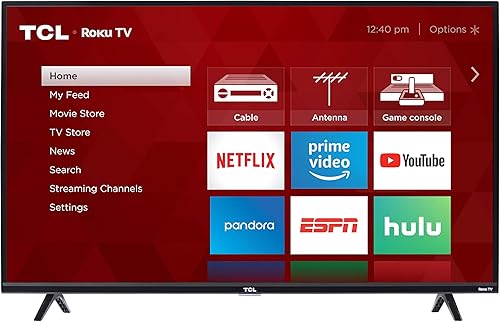
LED stands for light-emitting diode, and in a TV that means a traditional LCD panel lit from behind by LED bulbs. The LCD layer blocks or passes light to create the image, but it can never block 100 percent of the backlight, which is why blacks on a cheap LED TV look more like dark gray. Most budget and mid-range TVs on the market today are LED sets. The TCL 43S325, for example, is a 43-inch 1080p LED TV rated 4.6 out of 5 across more than 39,000 reviews at around $287. For a bedroom, kitchen, or any room with decent ambient light, a solid LED TV is hard to beat at that price.
What QLED Adds to the Picture
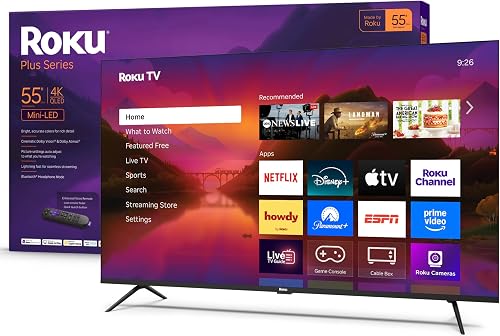
QLED is still an LED TV at its core, but it adds a layer of quantum dots between the backlight and the LCD panel. Those tiny semiconductor particles convert backlight energy into very precise wavelengths of red, green, and blue, which translates to a wider color gamut and higher peak brightness compared to standard LED. Samsung coined the term, but other brands use the same technology. The Vizio M55Q6-J01 is a 55-inch 4K QLED on a 60 Hz panel, rated 4.1 stars across 2,400 reviews, priced around $365. The Roku 55R6C7 is another 55-inch 4K QLED at $370, rated 4.6 stars, with Bluetooth, Ethernet, and USB-C connectivity. QLED is the practical upgrade for buyers who want noticeably richer colors without paying OLED prices.
How OLED Works and Why It Costs More
OLED panels do not use a backlight at all. Each pixel generates its own light and can switch off completely, producing absolute black. That pixel-level control means infinite contrast, no blooming around bright objects, and wide viewing angles that hold up without color shift when you move off-axis. The tradeoff is price. OLED panels are more expensive to manufacture and currently top out around 83 inches for consumer sets. OLED TVs can also develop permanent image retention if a static element sits on screen for hundreds of hours, though modern sets have built-in mitigation tools that make this rare for normal viewing.
Brightness: Where LED and QLED Have the Edge
If your living room gets a lot of natural light during the day, brightness matters more than contrast. LED and QLED TVs can push 500 to 1,500 nits or more in peak HDR mode, which holds up well in a sun-drenched room. OLED panels have historically been dimmer, typically 500 to 800 nits on consumer sets, though newer OLED generations have closed the gap somewhat. For HDR content, a high-brightness QLED with good local dimming can look excellent in a bright room where an OLED's black-level advantage is harder to see.
Contrast and Black Levels: OLED's Strongest Suit
Contrast ratio is the difference between the brightest white and the darkest black a TV can produce. LED TVs use full-array local dimming to approximate deep blacks by dimming groups of backlight zones, but those zones are never truly off. QLED improves on color but shares the same backlight limitation. OLED's per-pixel dimming means a night scene with a single bright star on a dark background looks genuinely stunning in a way LED and QLED cannot fully replicate. For dark-room movie watching, especially HDR content with high dynamic range, OLED still holds the contrast crown.
How to Pick Based on Your Setup
Start with your room and budget. Bright room with overhead lights or windows, budget under $400: an LED or QLED 4K TV makes excellent sense and leaves money in your pocket. Dark home theater room where you watch films at night: OLED justifies its premium. Gaming with fast motion: QLED and OLED both offer low-latency modes, so check the specific refresh rate and input lag spec of the model you are considering rather than assuming the panel type tells the whole story. Screen size above 77 inches: OLED options shrink quickly and prices spike, making a high-end QLED the more practical choice.
Common mistakes to avoid
- Assuming QLED is a completely different technology from LED. It is still an LCD TV with a backlight, just with quantum dots added.
- Buying an LED TV without checking whether it has full-array local dimming. Edge-lit LED sets with no dimming zones can look washed out on dark content even at high prices.
- Dismissing OLED burn-in risk entirely or worrying about it too much. It is real but uncommon for typical TV watching, and most modern OLED sets include pixel-refresh tools.
- Choosing panel type before settling on screen size and budget. A 65-inch LED 4K TV at $500 will usually make someone happier than a 48-inch OLED at the same price if they sit 10 feet away.
- Ignoring room lighting when comparing TVs in a store. Showroom floors are usually dim, which makes OLED look like an obvious winner. Evaluate in conditions that match your actual living room.
- Conflating brand marketing terms. 'NanoCell,' 'Mini LED,' and 'Neo QLED' are variations on the LED backlit LCD theme. None of them are OLED unless the listing specifically says OLED.
Frequently asked questions
Is QLED better than regular LED?
QLED produces a wider color gamut and higher peak brightness than standard LED because of the quantum dot layer. For bright rooms and HDR content, that difference is visible, especially in reds and greens. For basic TV watching in a moderately lit room, many people cannot distinguish them at a glance, and a well-reviewed LED at a lower price can be the smarter buy.
Does OLED really have burn-in?
Burn-in, or permanent image retention, is technically possible with OLED panels if a static high-contrast image sits in the same spot for many hundreds of hours. For general TV use, sports, streaming, and gaming with varied content, it is rarely an issue in practice. Most current OLED TVs include automatic pixel-refresh cycles and screen shift features that reduce the risk further.
Which is better for gaming, QLED or OLED?
Both can be excellent for gaming depending on the specific model. OLED responds faster at the pixel level, which can reduce motion blur in fast games. QLED sets with 120 Hz panels and low-latency game modes are also very competitive. Check the advertised input lag and refresh rate of each specific model rather than deciding on panel type alone.
Can you tell the difference between LED and QLED in a bright room?
In a well-lit room, QLED's brightness and color advantages are more noticeable than OLED's contrast advantage. A QLED with a high peak brightness rating, say 700 nits or above, can handle glare and maintain vivid colors better than a standard LED. The gap narrows at lower price points where both panel types may share similar backlight hardware.
What does Mini LED mean, and is it the same as QLED?
Mini LED refers to a backlight design that uses thousands of very small LED bulbs arranged in more dimming zones than a standard full-array backlight. More zones mean tighter control over which areas of the screen brighten or darken, reducing the halo effect around bright objects on dark backgrounds. Mini LED can be combined with quantum dots, so a TV might be both Mini LED and QLED at the same time. It is not the same as OLED. Contact us at hello@raltv.com if you have more questions.